Key advantages
- Improves the sound insulation of the wall system.
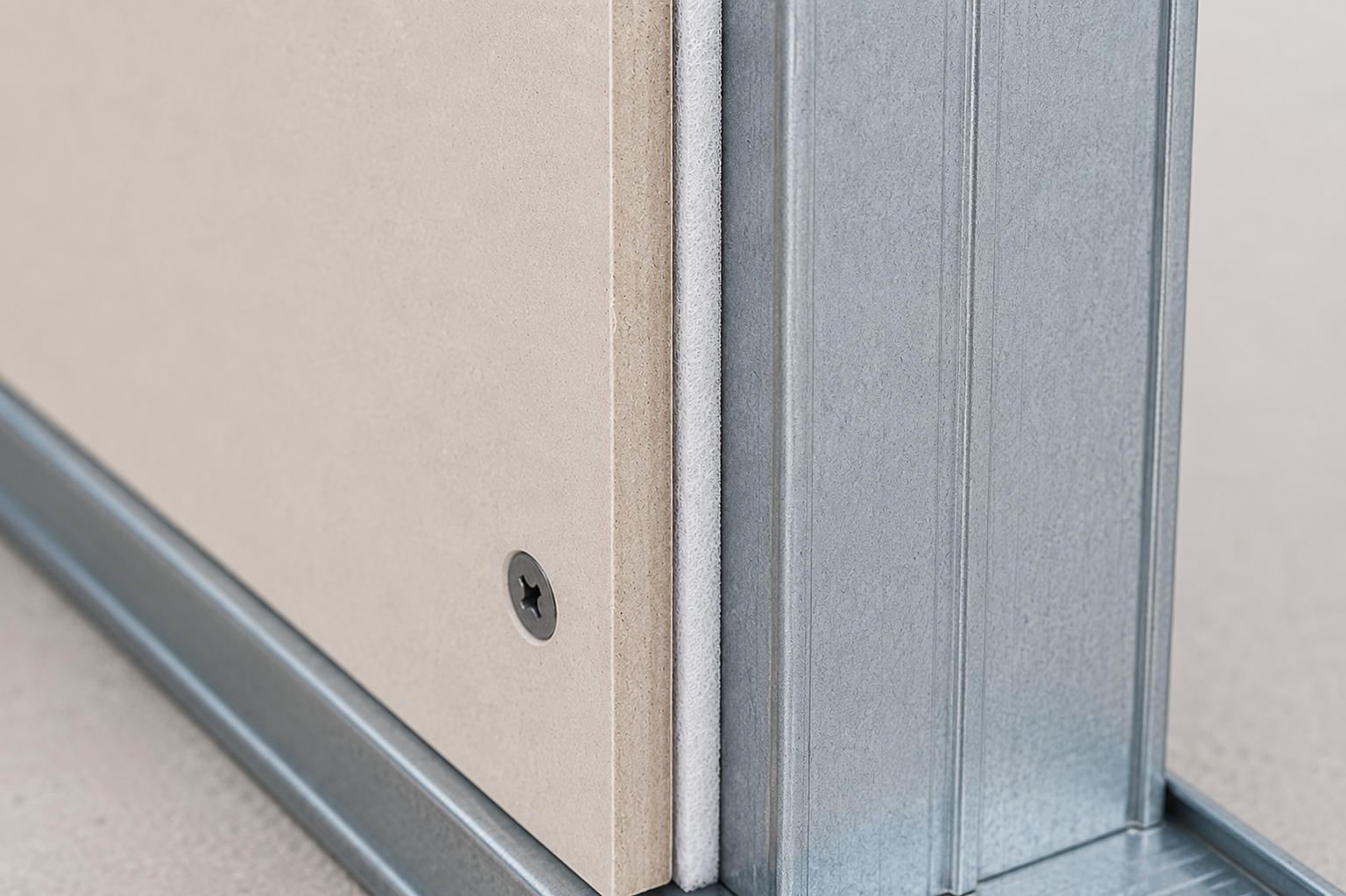
- Creates a separation between the stud and the base-layer plasterboard.
- Reduces vibration transmission through the wall framing.
- Suitable for Yoshino acoustic wall systems.
- Supplied in fixed, ready-to-fit dimensions for quick installation.
Why this product
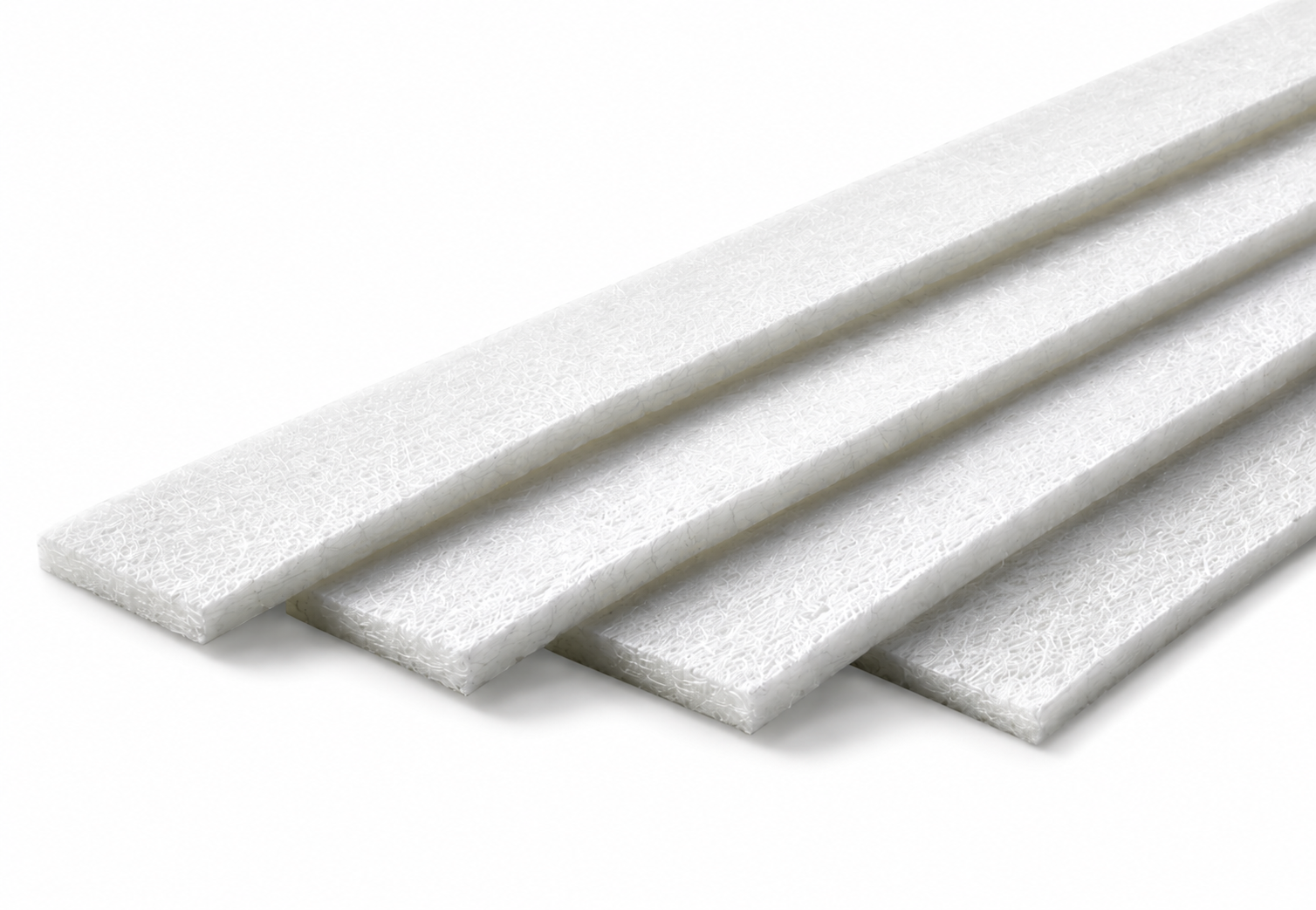
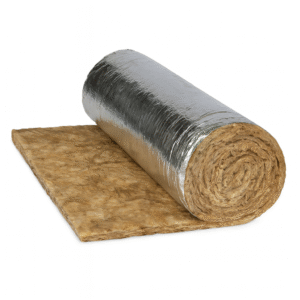
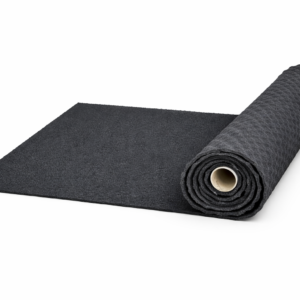
This is not “ordinary adhesive foam”, but an acoustic insulation strip made of glass fibre / glass wool designed for use within an acoustic plasterboard wall system. The manufacturer states that it is inserted between the stud and the base-layer lining board to improve the sound insulation of the wall.
Technical description
Tiger Glass Pad is an acoustic insulation material based on glass fibre, used as an ancillary component in acoustic plasterboard wall systems. According to Yoshino documentation, during installation the original 5 mm thickness is compressed to approximately 4 mm once the board is fixed.
Applications
- Acoustic plasterboard walls.
- Partition systems between rooms.
- Walls with sound insulation requirements.
- Yoshino systems such as Super Wall A-P and Dreamy 60.
Technical specifications
| Parameter | Value |
|---|---|
| Product name | Tiger Glass Pad |
| Japanese name | タイガーグラスパット |
| Designation | TGP |
| Manufacturer | Yoshino Gypsum |
| Material | Glass fibre / glass wool |
| Thickness | 5 mm |
| Width | 45 mm |
| Length | 1000 mm |
| Packaging | 200 units per carton |
| Intended use | Ancillary acoustic component for plasterboard wall systems |
Product features
- Insulating acoustic material.
- Installed inside the wall build-up, not as a visible finishing product.
- Designed to improve the performance of the wall as a complete system.
- Acoustic performance is measured for the wall system as a whole, not for the strip alone.
Installation
Install the Tiger Glass Pad between the stud/track and the plasterboard. As the board is fastened, the strip compresses from 5 mm to approximately 4 mm.